
Free written scope consultation - allowances, timeline, and change-order rules on paper before a single trade is scheduled
 Before
 After
After Before
 After
After Before
 After
AfterCGI Driveway & Pavers: The Santa Clarita Owner’s Guide
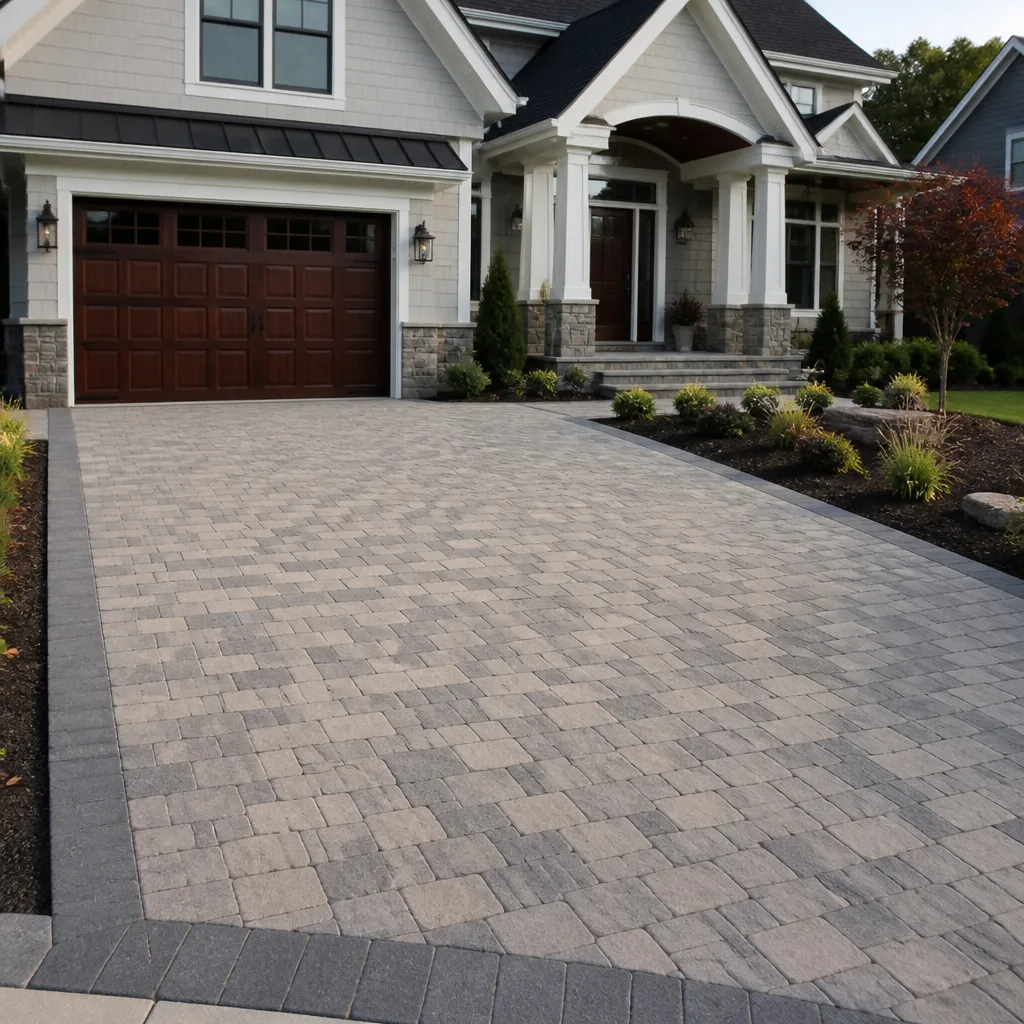
CGI-compatible driveway and paver systems installed in Santa Clarita typically run $7,000-$18,000 for paver driveways and $3,500-$11,000 for paver patios, with most replacement parts and repairs quoted in writing before work begins. We stock common CGI paver edge restraints, drainage channels, and interlocking base components for same-day repair when the substrate has shifted or the locking edge has failed. Most Santa Clarita homeowners discover the problem after the first heavy rain of the season, when water pools where the paver field meets the garage slab or when the edge course starts walking outward along the apron.
Which CGI Models This Applies To
CGI, or Concrete Grid Interlocking, is a paver system category rather than a single brand, which creates the first compatibility challenge. The term covers multiple manufacturers who produce interlocking concrete pavers with proprietary edge profiles, base grid thicknesses, and joint sand specifications. In Santa Clarita, we most commonly encounter CGI systems from Belgard’s Cambridge series, Techo-Bloc’s Blu 80, and several regional producers whose labels have weathered off after five to ten years of sun exposure.
To identify your specific CGI system, check the paver edge for a stamped manufacturer mark, typically on the spacer bar or the bottom face. If the label is gone, measure the paver thickness, the joint width, and the edge restraint profile. Standard CGI pavers run 60mm to 80mm thick with 2mm to 5mm joints, but the edge restraint, which is the part that fails first, varies by manufacturer. Some use a plastic snap-in restraint anchored with 10-inch spikes; others use an aluminum L-profile. We carry both in our Santa Clarita warehouse, plus the compatible stakes and fasteners. OEM edge restraints match the original color and profile exactly; quality aftermarket equivalents from Perma-Edge and PaveTech perform identically at roughly 15% less cost. The catch is the spike pattern: mismatched spacing leaves unsupported gaps where the restraint lifts during the next freeze-thaw cycle, which in Santa Clarita’s high-desert climate means winter nights below 40°F followed by 70°F afternoons.
Signs Your CGI Driveway & Pavers Is Failing
- Edge course migration. The outer row of pavers shifts outward by a half-inch or more, breaking the bond line. This happens when the edge restraint loses anchoring, usually because the spikes have corroded in Santa Clarita’s alkaline soil or because the base material has washed out from behind the restraint.
- Water pooling against the garage slab or foundation. CGI systems rely on a 1% to 2% slope away from structures. When the bedding sand migrates or the base settles, the slope reverses. In Stevenson Ranch and other hillside neighborhoods, this accelerates because the original grade was already cut to accommodate the driveway.
- Individual pavers rocking underfoot. A paver that moves when stepped on has lost bedding sand beneath it, typically from joint sand washout that allows water to penetrate and fluidize the bedding layer. The fix is not glue; it is lifting the paver, re-screeding the bedding, and re-compacting the joint sand.
- Weeds or grass growing in the joints. This indicates polymeric joint sand failure, which in CGI systems often means the original sand was not fully activated by water during installation, or it has degraded under UV exposure. Santa Clarita’s 280-plus days of annual sun will degrade inferior joint sand in four to six years.
- Cracking or spalling of individual pavers. Concrete pavers rated for residential driveways should handle 8,000 PSI. Spalling at the corners suggests freeze-thaw damage from trapped moisture, or more commonly in our market, de-icing salt residue from out-of-state vehicles that chemically attacks the cement paste.
BeforeAfterReplacement Cost & What’s Included
CGI paver repair pricing in Santa Clarita depends on whether we are addressing a localized failure or a systemic issue. Edge restraint replacement runs $800-$2,500 for a typical two-car driveway apron, including removal of the edge course, installation of new restraint with stainless or galvanized spikes, re-compaction of the base, and relay of the pavers with fresh bedding sand. Full base repair, required when the aggregate has washed out or settled, adds $1,500-$4,000 because we must lift the paver field, re-grade and compact the base, and reinstall with new geotextile fabric.
Every CGI repair quote from Rowan Construction Group Santa Clarita is a flat written price with line-item scope: paver count, square footage of base repair, cubic yards of class II base, bags of polymeric joint sand, and labor hours. Under Clause 1 of the Haven Standard, that price is delivered before any work starts. No change proceeds without a signed change order, which is the discipline that has kept our projects within a few percent of the agreed cost since 2007. The 365-Day Done Right Promise covers the repair; if the edge lifts or the paver settles, we return and make it right. The documented photo record, included as standard, shows the base condition before we cover it and the compaction readings we achieved.
DIY or Call Us?
A homeowner can safely inspect a CGI paver failure without risk. Lift one paver at the edge with a flat pry bar to check the bedding sand condition and the edge restraint type. If the base aggregate is still compacted and the geotextile is intact, the repair is within reach of a patient DIYer with a plate compactor rental and a bag of polymeric sand.
Where DIY goes wrong is in the compaction sequence and the edge restraint anchoring. Hand-tamping does not achieve the 95% Proctor density that prevents future settlement, and driving spikes with a sledgehammer rather than a dead-blow hammer cracks the restraint. More critically, if the base has settled because of a drainage issue behind the driveway, covering it with new pavers hides the problem until the foundation or garage slab shows water intrusion. We pull permits when required by Santa Clarita’s municipal code for driveway modifications that alter drainage patterns, and we warranty the result. Call (747) 294-3985 to schedule your free estimate.
FAQs
Properly installed CGI pavers with quality polymeric joint sand last 25 to 30 years in Santa Clarita’s Mediterranean climate, though edge restraints and joint sand need attention at year 8 to 12. The high UV exposure and occasional freeze-thaw cycles in Canyon Country and Sand Canyon accelerate joint sand degradation compared to coastal Southern California. Call (747) 294-3985 for an exact quote on your specific condition - estimates are free.
Localized edge restraint failure and isolated paver settlement can be repaired without touching the main field. We lift the affected area, address the base or drainage cause, and reinstall with matching pavers. Full replacement is only necessary when the base has failed across the entire driveway or when the paver style is discontinued and patch repairs would be visually unacceptable. Call (747) 294-3985 for an exact quote - estimates are free.
Most edge restraint and localized base repairs are completed in one to two days, including cure time for the polymeric joint sand. Full driveway replacement runs four to seven days depending on square footage and whether we are modifying the grade or drainage pattern. We do not promise same-day completion on planned construction work; the base must be compacted in lifts and the joint sand must be activated and allowed to set. Call (747) 294-3985 to schedule your free estimate.
We stock common edge restraints, spikes, bedding sand, and polymeric joint sand compatible with major CGI systems at our Santa Clarita warehouse. Specialty paver colors or discontinued profiles may need a two-day order from Belgard or Techo-Bloc. We also source parts for KraftMaid, Cambria, and Silestone product lines. Call (747) 294-3985 to confirm availability for your specific system - estimates are free.
Rowan Construction Group Santa Clarita is an independent service provider, not affiliated with CGI, Belgard, Techo-Bloc, or any paver manufacturer. We select parts based on compatibility and performance, not brand loyalty.
Grant Rowan’s approach to every job site, whether it’s a full paver driveway in Valencia or a repair on a hillside grade in Stevenson Ranch, comes from the same habit: measure twice, document once, build it right the first time. The photo record, the written price, and the signed scope are not marketing - they are the minimum standard for showing your work.
Written by Grant Rowan, Owner, Rowan Construction Group Santa Clarita at Rowan Construction Group Santa Clarita, serving Santa Clarita and nearby areas.