
Free written scope consultation - allowances, timeline, and change-order rules on paper before a single trade is scheduled

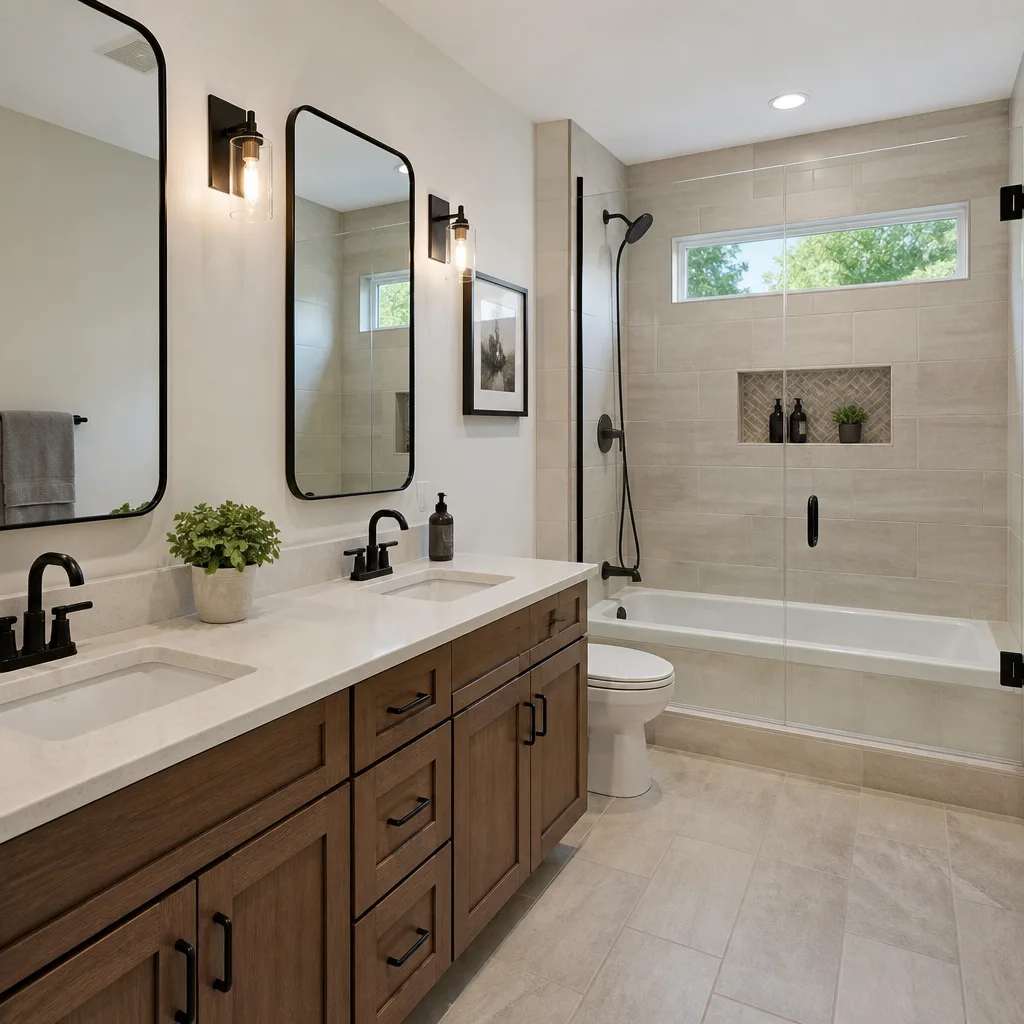
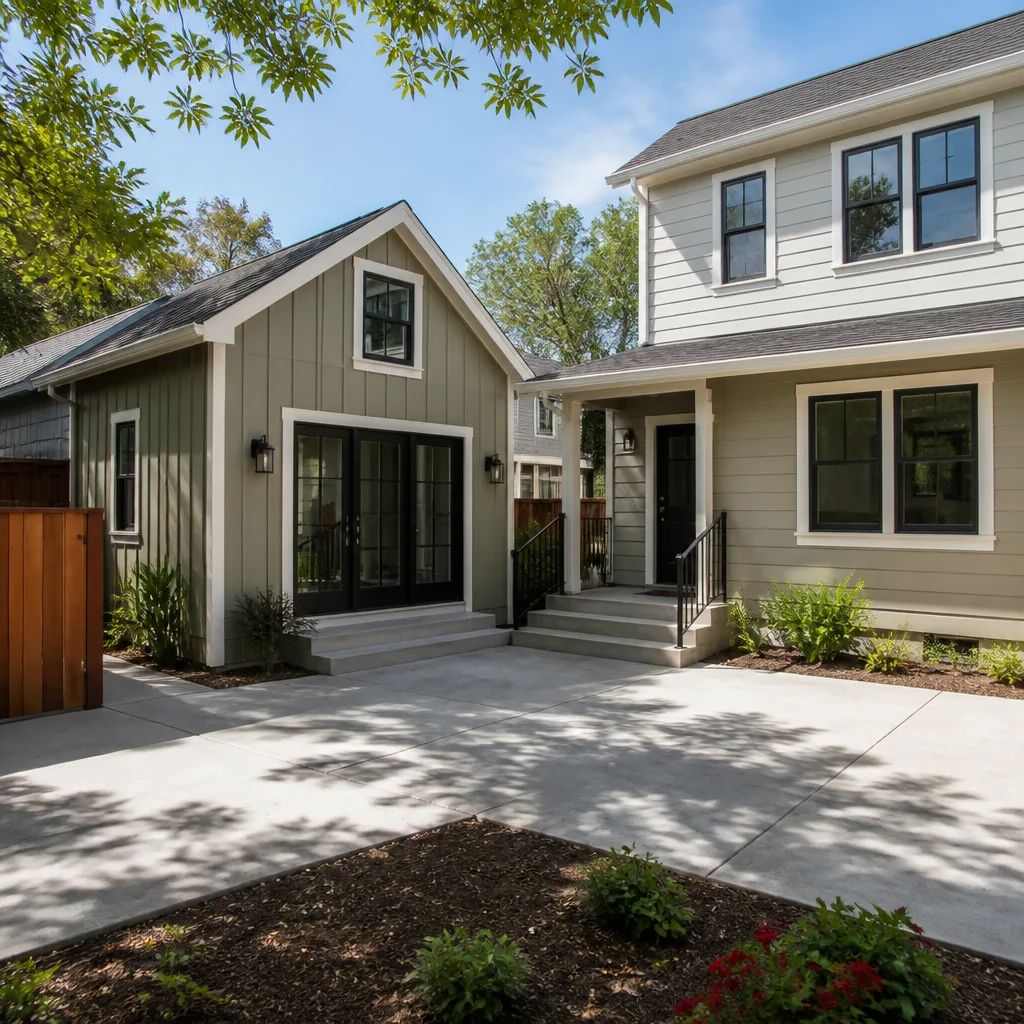

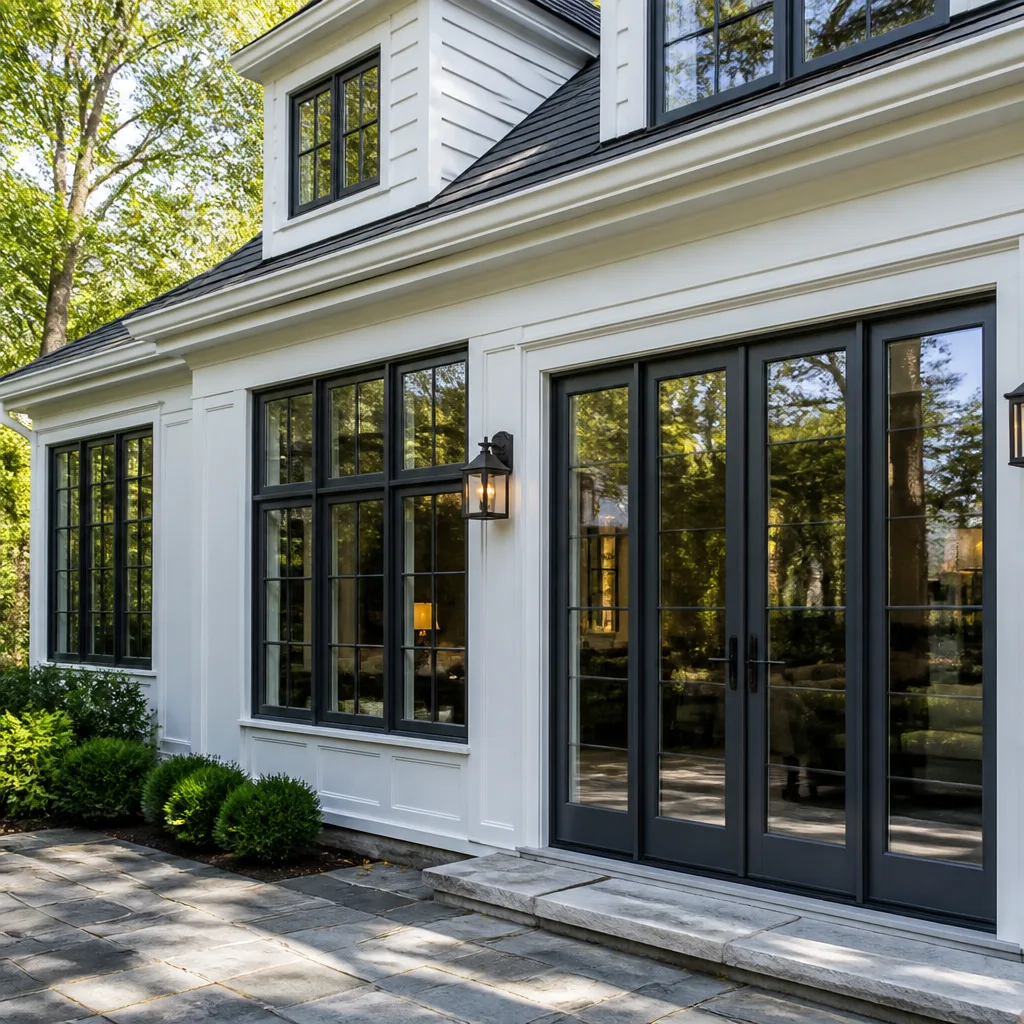


 Before
 After
After Before
 After
After Before
 After
AfterECO Window Systems Roofing: The Santa Clarita Owner’s Guide
We stock and install ECO Window Systems-compatible roofing components in Santa Clarita, with typical roof repairs running $400-$1,800 and full replacements at $8,000-$20,000 depending on slope and substrate condition. Most ECO Window Systems flashing, seal kits, and integrated drainage parts are on our trucks or available next-day through our supplier network. Homeowners usually discover the problem after Santa Clarita’s first hard rain of the season, when water shows up at the window-to-roof junction that was dry in August.
Grant Rowan grew up watching his uncle frame houses across Los Angeles County, and the pattern he noticed then still holds: the leak you find in October started at a detail that was installed wrong in June. That’s why our crews photograph every layer before closing it up.
Which ECO Window Systems Models This Applies To
ECO Window Systems operates in three product tiers that affect which roofing interface parts you’ll need. The ECO 3000 series uses a standard J-channel with a snap-in drip cap; the ECO 5000 series upgraded to an integrated weep screed with a continuous head flashing; the ECO 7000 architectural line requires a custom extruded saddle flashing with a two-stage drainage plane. The label is inside the top sash track, visible when you slide the window fully open. If the label’s worn off, measure the frame depth: 3¼ inches indicates 3000-series, 4½ inches points to 5000-series, and the 7000 line runs 5⅞ inches with a thermal break you can feel as a raised ridge.
We source OEM ECO Window Systems flashing from the manufacturer’s West Coast distribution center in Ontario, California, typically two business days. For the 3000 and 5000 series, we also stock a Made-in-USA aftermarket equivalent from Lomanco that matches the critical dimensions and carries the same 20-year material warranty. The 7000 series we keep OEM-only; the saddle geometry is proprietary and we’ve seen aftermarket versions fail at the thermal break after three Santa Clarita heat cycles. Under Clause 1 of the Haven Standard, we quote both options in writing so you can check the spec sheets before anyone touches the roof.
Signs Your ECO Window Systems Roofing Is Failing
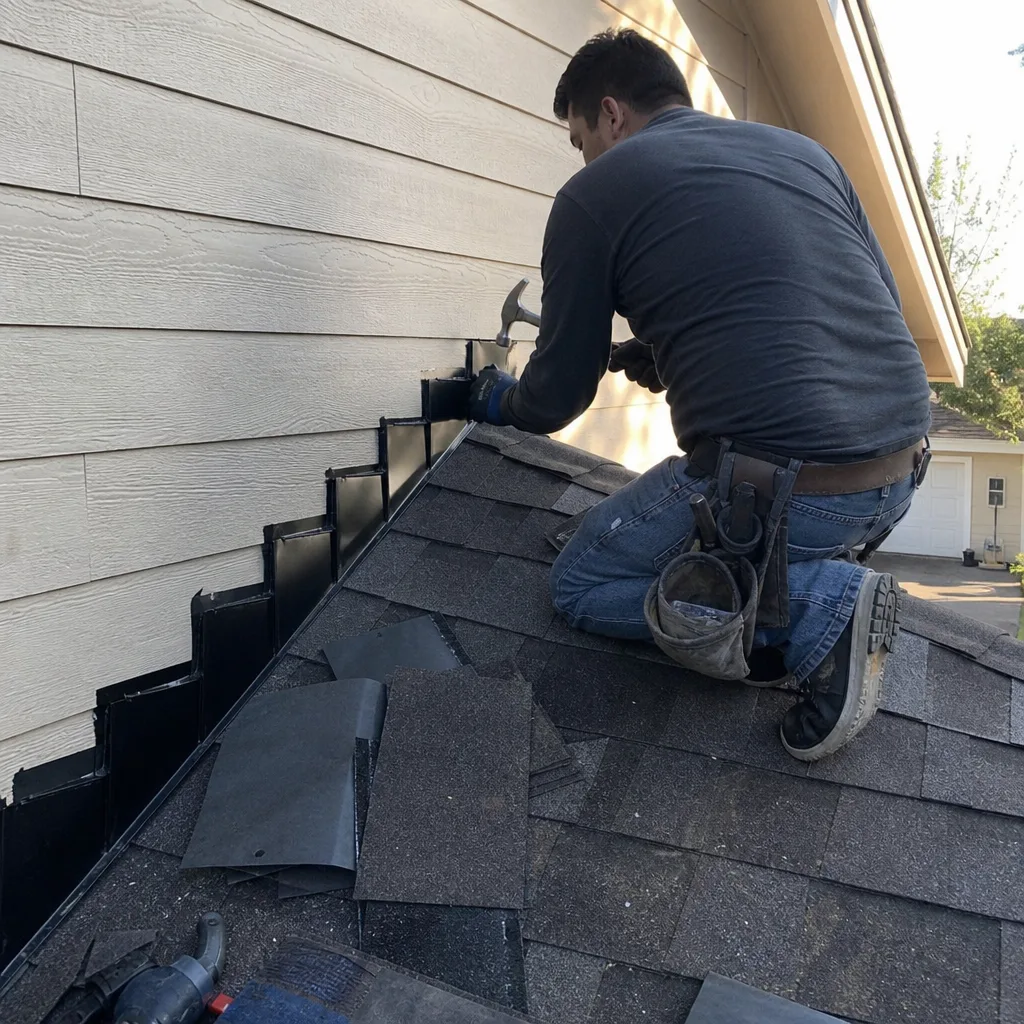
- Staining at the top corners of the window frame. This indicates the head flashing has lifted or the sealant bed has cracked where the roofing membrane meets the window flange. Santa Clarita’s 110-degree summer days harden butyl tape faster than the manufacturer rates it for.
- Water pooling on the sill after rain, even with the window closed. The weep holes in the subsill are clogged with stucco dust or the drainage plane behind the window is blocked. In Stevenson Ranch and other newer Santa Clarita developments, we’ve found this caused by stucco overspray during original construction that took five years to fully seal the channels.
- Visible gaps between the window frame and the surrounding roofing trim. The J-channel or saddle flashing has pulled away from the nail fin, usually because the original installer used roofing nails instead of the specified #8×1½-inch pan-head screws. The expansion contraction from Santa Clarita’s 40-degree winter nights to summer afternoons works nails loose in about seven years.
- Musty odor in the wall cavity near the window. Water is entering behind the flashing and saturating the sheathing. By the time you smell it, the OSB or plywood substrate has likely begun to delaminate. We document this with borescope photos before quoting repair versus full replacement.
- Paint bubbling on the interior wall below the window. The leak path has migrated past the rough opening and found the drywall. This is the symptom that generates the most calls in Santa Clarita, and it’s almost always three months past when the actual flashing failed.
BeforeAfterReplacement Cost & What’s Included
| Service | Price Range in Santa Clarita | What’s Included |
|---|---|---|
| ECO Window Systems flashing repair (localized) | $400-$900 | Remove affected shingles or tile, replace flashing and sealant, reinstall roofing, photo record |
| ECO Window Systems full interface rebuild (per window) | $900-$1,800 | Remove window, replace substrate if damaged, install new OEM or equivalent flashing, reflash, replace window, full weather seal |
| Roof replacement with multiple ECO Window Systems integrations | $8,000-$20,000 | Full tear-off, substrate inspection, new underlayment, new roofing, all window interfaces rebuilt with documented photo record |
What drives the range: roof pitch (steeper means more labor hours), tile versus composite shingle (tile requires delicate removal and reinstallation), and whether the substrate behind the flashing is sound. We check that with a moisture meter before quoting. The price we write is the price you pay; no change order proceeds without your signature, which is the discipline that has kept our projects within a few percent of the agreed number since 2007. Every roof repair carries our 365-Day Done Right Promise and a written warranty you can screenshot.
DIY or Call Us?
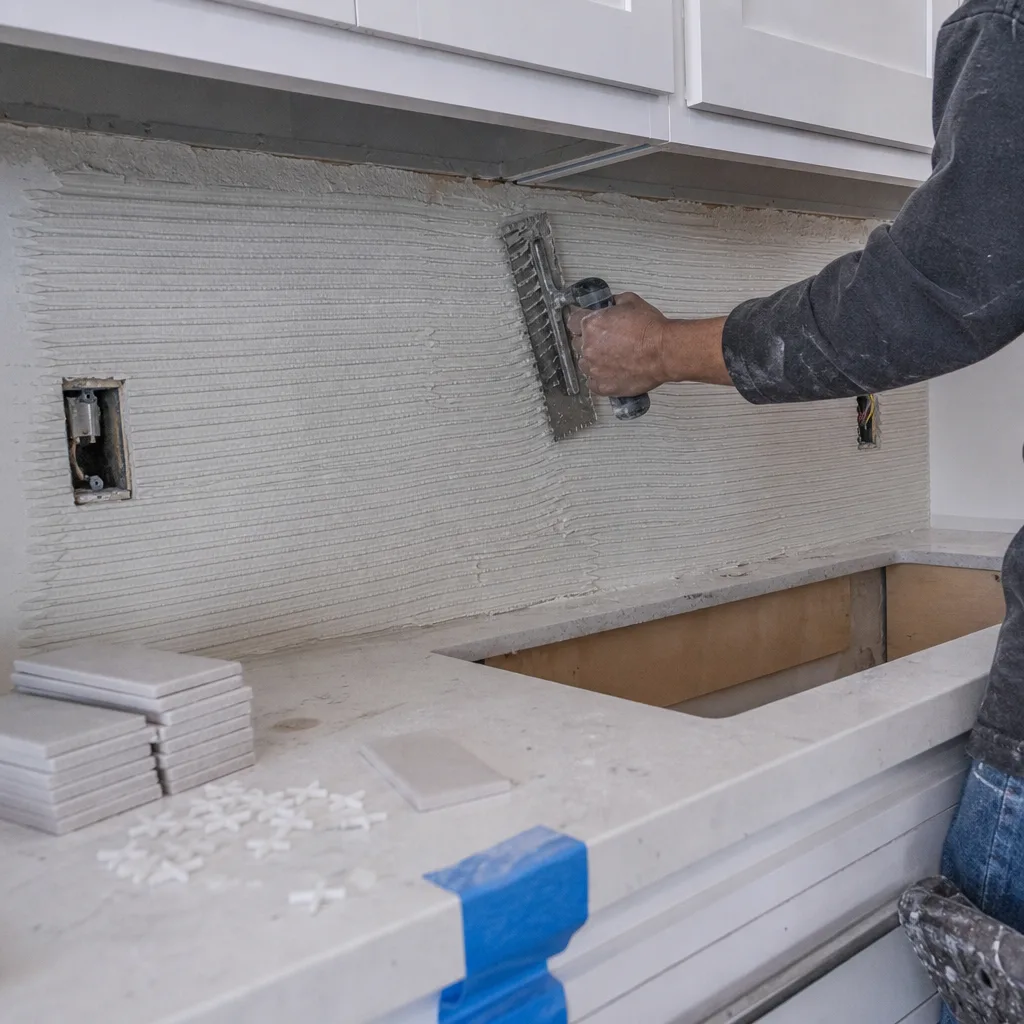
Here’s what you can safely check yourself: clear weep holes with a pipe cleaner, verify the window locks fully, and look for obvious gaps in the exterior sealant from the ground with binoculars. Do not attempt to remove or reinstall roofing material at the window interface. The flashing is integrated with the water barrier behind your siding; disturb it without knowing the layer sequence and you’ll convert a $600 repair into a $3,000 wall rebuild. The fall risk on even a single-story Santa Clarita roof is real, and the Santa Clarita Valley’s afternoon winds in spring add a factor you can’t see from the driveway.
We carry ECO Window Systems-compatible flashing, seal kits, and fasteners on our service trucks. If your part isn’t on the truck, we have next-day pull from Ontario. Call (747) 294-3985 and we’ll schedule a free estimate with a written price before any work starts. “Measure twice, document once, build it right the first time” - that’s how we run every job.
FAQs
Properly installed OEM flashing lasts 15-20 years in Santa Clarita’s climate, though the butyl sealant bed typically needs refresh at year 8-10. The 7000-series thermal-break saddle has a shorter effective life, about 12-15 years, because the expansion differential between aluminum and the substrate stresses the corner welds. Call (747) 294-3985 for an exact quote on your model - estimates are free.
Localized sealant failure can be repaired if caught early and the substrate is dry. Once the butyl tape has hardened or the metal has corroded at the fold, replacement is the only lasting fix. We test with a moisture meter and show you the reading before recommending either path. Call (747) 294-3985 for an exact quote - estimates are free.
A single-window flashing replacement takes 3-4 hours, including removal of surrounding roofing, substrate inspection, installation, and seal cure time. Full roof replacement with multiple ECO Window Systems interfaces runs 3-5 days depending on square footage and pitch. We provide a written schedule with the quote, not a verbal guess. Call (747) 294-3985 to schedule your free estimate.
We stock 3000 and 5000 series flashing, seal kits, and fasteners on our Santa Clarita service trucks. The 7000 series saddle flashing we order OEM from Ontario, California, with typical next-day availability. We do not use generic substitutes on the 7000 line; the thermal-break geometry is proprietary and aftermarket versions have failed in our documented experience. Call (747) 294-3985 to confirm availability for your model - estimates are free.
Rowan Construction Group Santa Clarita is an independent service provider and is not affiliated with ECO Window Systems. We also stock parts for KraftMaid, Cambria, and Silestone products.
Written by Grant Rowan, Owner, Rowan Construction Group Santa Clarita at Rowan Construction Group Santa Clarita, serving Santa Clarita and nearby areas.